About Liquid Nitrogen Storage Tank
Specifications:
| Item |
Effective Volume
(m3) |
Max Working Pressure
(Mpa) |
Size
(mm) |
Weight
(KGS) |
Static Evaporation Rate ( % per day) |
| LO2 |
LN2 |
LAr |
| CFL-5/0.8 |
5 |
0.8 |
1912x5280 |
-3725 |
0.43 |
0.65 |
0.46 |
| CFL-5/1.6 |
1.6 |
-4450 |
| CFL-10/0.8 |
10 |
0.8 |
2416x5500 |
-7235 |
0.36 |
0.55 |
0.38 |
| CFL-10/1.6 |
1.6 |
-752 |
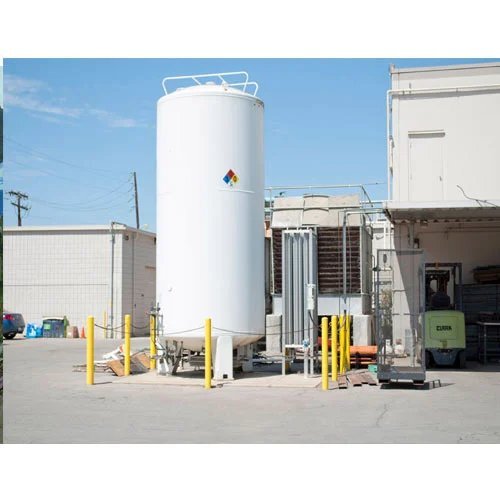
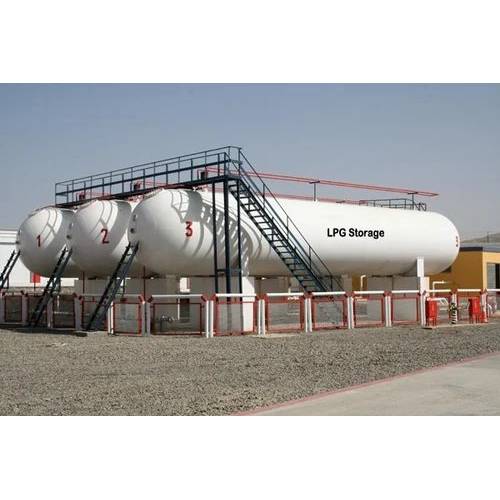
Optimal Storage CapacityWith a 10,000-liter capacity, this liquid nitrogen tank provides ample storage for high-volume industrial applications. Its size makes it suitable for major facilities requiring consistent and secure supply of liquid nitrogen. The large capacity minimizes the need for frequent refilling, streamlining operations and helping businesses achieve efficient resource management.
Durability and PerformanceCrafted for industrial-grade reliability, the tank's robust construction ensures longevity even under demanding conditions. The white color finish not only contributes to heat reflection, maintaining internal temperatures, but also offers a clean and professional appearance. Designed to withstand industrial environments, it guarantees consistent performance and safe handling for a wide range of processes.
FAQ's of Liquid Nitrogen Storage Tank:
Q: How is the 10,000-liter liquid nitrogen storage tank installed at an industrial site?
A: Installation requires a secure, level foundation equipped to support a fully filled tank. It is typically performed by professional technicians who ensure proper plumbing, venting, and safety measures, with adherence to industry-specific regulations. The tank can be installed indoors or outdoors, depending on space and operational needs.
Q: What are the primary uses of this industrial-grade liquid nitrogen storage tank?
A: The tank is designed to store large volumes of liquid nitrogen for applications such as food processing, cryopreservation, medical facilities, metallurgy, and laboratory environments. It provides a steady supply essential for cooling, freezing, and various scientific and industrial operations.
Q: When should routine maintenance and inspections be performed on the tank?
A: Regular inspections should be carried out at intervals prescribed by the manufacturer-typically every few months. Maintenance involves checking valves, insulation, pressure controls, and cleaning exterior surfaces, ensuring safe operation and preventing leaks or contamination.
Q: Where is this tank most commonly used within India?
A: These tanks are widely utilized by industrial facilities in major cities and manufacturing hubs across India, especially by food processing plants, laboratories, medical establishments, and chemical industries that require reliable and safe liquid nitrogen storage solutions.
Q: What is the process for refilling or replenishing the liquid nitrogen in this tank?
A: Refilling is usually managed by certified suppliers using specialized cryogenic transfer equipment. The process ensures minimal atmospheric exposure to prevent loss or contamination and involves strict safety procedures enforced by skilled personnel.
Q: How does using a 10,000-liter liquid nitrogen storage tank benefit industrial operations?
A: It provides a dependable, large-scale solution for storing liquid nitrogen, minimizing supply interruptions and operational downtime. This capacity supports continuous processes, reduces logistical inefficiencies, and enhances safety through robust containment.
Q: What safety precautions should be followed during the usage of the tank?
A: Operators must wear protective gear and ensure proper training in handling cryogenic substances. Safety features-such as pressure-relief valves and proper insulation-must be maintained, and emergency protocols should be established for handling leaks or spills.






 Send Inquiry


 Send Inquiry


 English
 Spanish
 French
 German
 Italian
 Chinese (Simplified)
 Japanese
 Korean
 Arabic
 Portuguese